Yellowdig is a very effective tool for STEM classes. With the right ~simple~ setup, you can motivate students to participate and engage with each other throughout the whole semester.
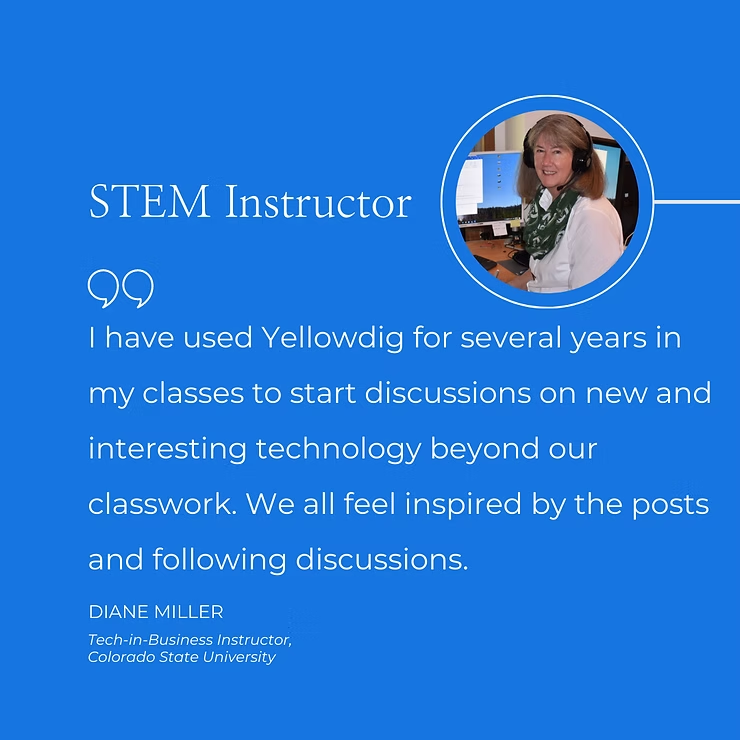
If you would like to learn more about why Yellowdig works for science, technology, engineering, and math classes, check out our conversations and research with STEM professors:
-
Watch Dr. Vicki Hart, Assistant Professor of Public Health at the University of Vermont, present her research on Yellowdig’s efficacy in our guest webinar.
-
Read our blog post on success using Yellowdig as a help forum.
-
-
Listen to our podcast with McKinzie Sutter, from the Department of Agronomy and Horticulture at the University of Nebraska-Lincoln
-
Read the case study on McKinzie’s online undergraduate course on genetic principles in agriculture.
-
Get started with these 4 easy steps to creating a STEM specific Yellowdig community:
1) Set up the point system in a way that will drive engagement for your class.
-
For a STEM class, it is not necessary to have high word count requirements on posts or comments. Students should feel free to ask questions and respond freely.
-
Consider having comments be equal or worth more than posts. Students derive the most educational value from working collaboratively to solve problems, instead of just being stuck. Encouraging back and forth conversations by encouraging students to reply to one another can drive high quality engagement that leads to better understanding.
-
Create and give out accolades. Giving accolades to students can help to validate their answer and incentivize further participation.
-
Allow social points. With Social points include points for reactions like giving another student’s post a “thumbs up” for posting a useful answer to their question. We have found that social points incentivize high-quality content and give students a greater sense of ownership over their community.
2) Set up a topic called “Help Forum” where students can ask questions about homework and problem sets.
-
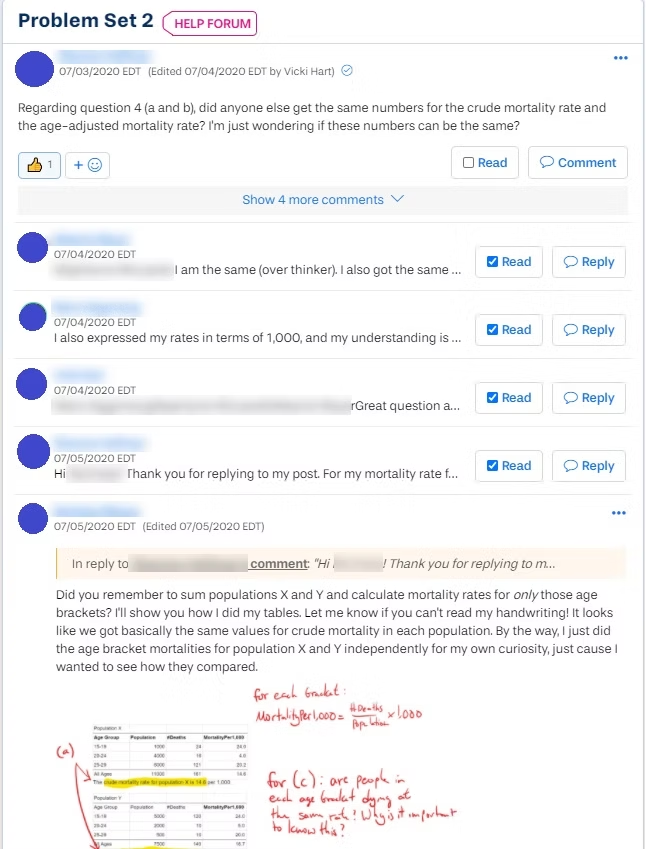
Asking questions is a key way for students to learn and be able to move forward in their problem sets. Encouraging collaboration can help all students involved. See an example post in a “Help Forum” below.
3) Encourage students to use the @ mention function.
-
They can ask questions to students who they’ve previously interacted with who seem to have a grasp of that specific topic, or they can draw attention to it for you or your TAs.
4) Create Topics that are relevant to your course and mark them as required.
-
Yellowdig should not only be used for discussing problem sets. Great value can be derived when students share and discuss real-world connections to your course. Keeping a STEM course relevant in an ever changing world is a difficult task for a single professor, but enabling students to bring in content they discover can immediately ensure that your class is staying up to date. Students can share videos, articles, or even simulations they find interesting for other students to learn from as well.
-
Students can tag other topics in addition to ‘“Help Forum,” so you can filter by topic and easily track which material is causing the most difficulty for your students. You could also encourage students to use hashtags when posting in the forum to see which topics come up the most.
The beauty of setting up a Yellowdig community for a STEM class is that it enables students to help each other succeed. It brings the late night dorm lounge time when groups of students would meet up to finish up problem sets to a virtual setting that includes the whole class.
After the community is up and running, be sure to keep these 5 tips in mind:
1) Have students introduce themselves to ensure everyone knows each other and gets comfortable with using the platform early on, not just when there is a problem.
-
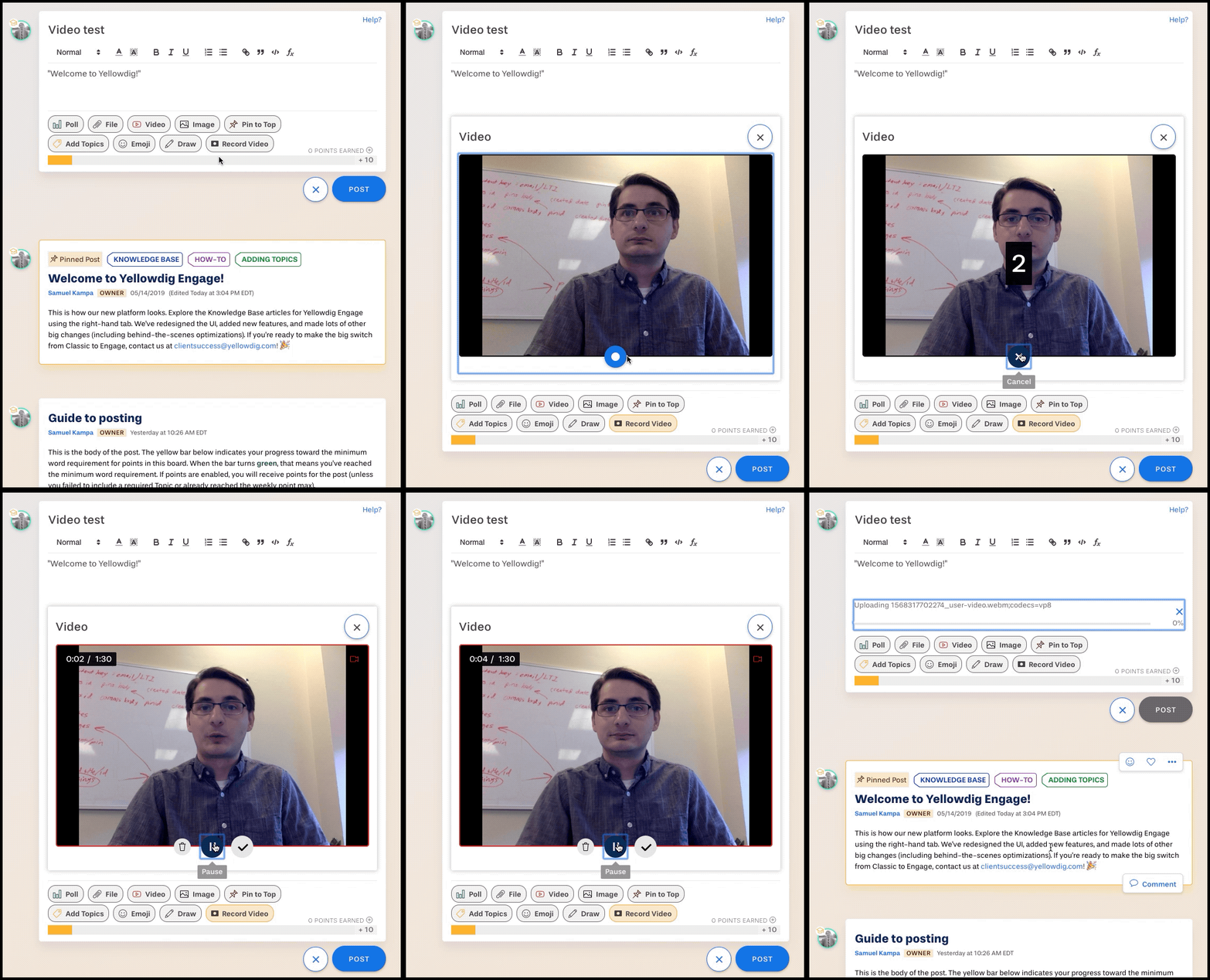
You can encourage students to do this with the built in video recording feature.
2) Have yourself or a TA jump into the “Help Forum” topic every so often to give accolades to students who provided correct answers and jump into the discussion where there seems to be confusion.
3) Mention the Q & A forum on Yellowdig often during your synchronous class so that students remember to use it and know you are checking in regularly.
Bringing in big questions that surface on the Yellowdig help forum to class can help reassure students that their questions are being answered comprehensively.
4) Make sure students are aware of and use the built in features of Yellowdig that are designed specifically for STEM classes.
Use LaTeX and Yellowdig’s Draw function to easily discuss formulas and complicated diagrams. Learn more about STEM best practices on our knowledge base.
5) Encourage students to have fun!
Thank you for taking the time to read through our Guide to creating an effective STEM discussion community. If you are looking for more advice on how to run an effective, open discussion, please take a look at this post with 8 tips for high-quality, open conversations. We hope you found this guide helpful and look forward to hearing about your communities.
Not a STEM instructor or looking for more advice? Check out our research-back guide to setting up a Yellowdig Community.
Please reach out if you have any questions at learnmore@yellowdig.com.