Yellowdig had the honor of hosting a guest webinar with DePaul University, a school that has been integrating Yellowdig’s services for “Future Forward” program. We had notable key speakers from our team and DePaul’s team to talk about the ways Yellowdig is used.

What is the Future Forward Career Education Program?
It is a co-curricular career exploration program designed for first-year students to get engaged with career paths early. At DePaul University, it is important to them that students, from the very first quarter, begin thinking about how their career connects to their academics. Essentially, “the program is a year long program that allows students to really jumpstart that journey towards their career.”
In order to achieve their goals, the faculty at DePaul let students engage in meaningful career exploration through Yellowdig. Students were not only able to learn about the world of work and how to plan out their experiences, but they also had the opportunity to learn about themselves. Students were allowed to work at their own pace in a peer-to-peer based community. They also had the opportunity to attend virtual job fairs, workshops, job shadows, and interviews. This helped students build confidence for future endeavors.
DePaul recognized that a lot of the new first-year students couldn’t experience what it meant to be on campus, making it hard to make friends and connections in a virtual classroom. This is an aspect that Yellowdig was able to assist with. Hillary described how the “social media-like platform” would be “familiar” to the students, which created a learning platform for them to have pragmatic conversations, as well as conversations you would hear in a dorm or food hall. They utilized Yellowdig’s topic tags because it “allowed us to inspire conversation without necessarily directing it.” The point system incentivized students to post more, comment more, and interact more. Hillary noted that engagement between students went exceptionally well.
Application Highlights
The speakers were able to highlight specific moments on Yellowdig’s platform that showed positive interactions between the student. Here they are broken down below.
Community
Margie noted that Yellowdig’s platform is “so much more authentic than hierarchical discussion boards.” Unlike a traditional discussion board, students have the freedom to post whatever they want instead of the typical ‘professor posts the prompt and students respond’ situation. Students can even post in a topic called “random thoughts,” which DePaul students have done frequently in the Future Forward Program. On Yellowdig’s platform, there is no need to wait for the instructor to post first.
Again, this program is centered around career building, but also community building, and it is not credit-bearing. The DePaul faculty realized that the course had to be fun, and Yellowdig helps that by giving students a space to easily be authentic and organic with their cohort.
Sharing
As mentioned earlier, “Random Thoughts” was a topic tag that was used a lot by students, which allowed for the authentic and organic conversation that doesn’t usually happen in traditional discussion boards. Margie shares an example in the image below:
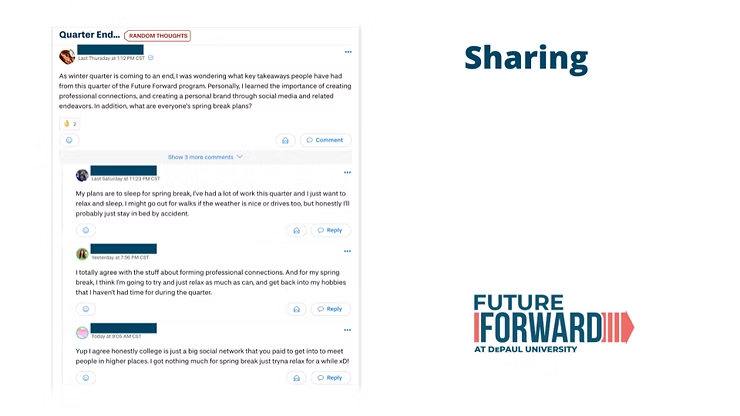
Yellowdig allows the flexibility that students need to enhance their peer-to-peer communication. As Margie says, there’s no need for instructors to post “okay, Boomer” kinds of prompts for students to converse.
Reflection
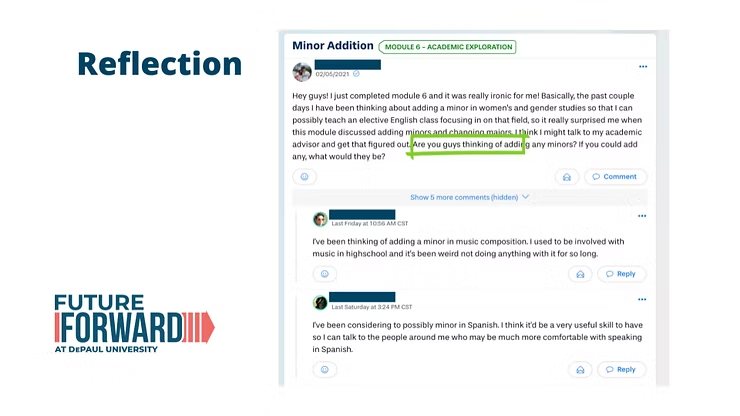
The other thing that Yellowdig was able to help with for the Future Forward Program was the peer-to-peer reflection. It seemed that over time students normalized the uncertainty around career paths by posting reflection posts. As you can see below, the student asks “Are you guys thinking of adding any minors?”
Shared Experience and Normalization
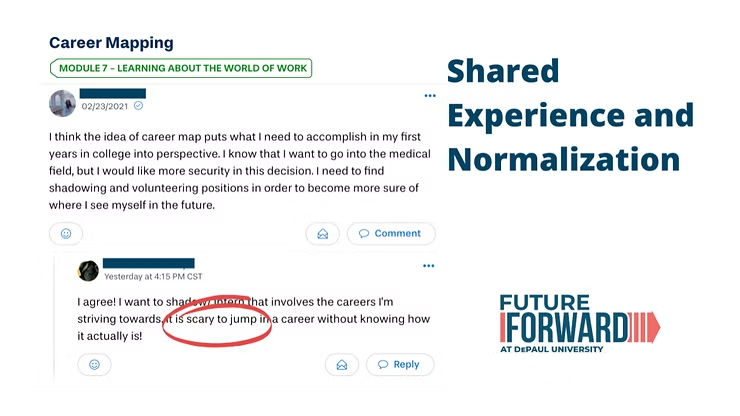
After deploying this program, and observing students on Yellowdig’s platform, they were able to see how earnest students were that usually doesn’t happen in a traditional discussion board.
Margie noted that students were able to make the space theirs, not a place where they have to turn in homework for a grade. Initiating and building a career path can be intimidating, so the fact that students can share their vulnerabilities and experiences in a safe space is very beneficial in the long run.
Mutual Support (Cheerleading)
Peer-to-peer support among the students is exceptionally prevalent. In the clip below, Margie explains how one student was a “cheerleader” to another student who was concerned about their resume.
As much as it is beneficial to the students, it is also beneficial to the instructors because it allows them to see what the students are truly concerned about.
Mutual Support (Advice)
Again, students are able to share advice with each other from their own experiences, which is the most effective way for students to learn. No one can learn better than from people in the same age and generational group.
Margie says, “We don’t look like our students. I mean, even when I was younger, I didn’t look like all my students,” and it is a lot more meaningful to hear from peers because there is a level of relatability. The conversations between the students are authentic, organic, and truly helpful for first-year students to begin thinking about building their career path.
Click below to watch the full webinar.