December 22, 2025

What a Year of Student Learning Data Reveals About Education in the Age of AI

Unlocking Student Motivation with Gameful Learning

Instructors everywhere face the same uphill climb: getting students to participate meaningfully—especially in online classes. Despite your best efforts, traditional discussion forums can feel more like boxes to check than places for real learning. What’s the antidote? For many educators, the answer is gameful learning.

What is Gameful Learning?

Gameful learning isn’t about turning your classroom into an arcade. It’s about applying the elements of games—clear goals, meaningful choice, and immediate feedback—to academic environments. Platforms like Yellowdig use points, badges, and accolades to recognize real contributions, making participation feel rewarding, not obligatory.

Why Gameful Elements Spark Engagement

Why do students respond so well to this approach? Because gameful mechanics tap into motivation in ways that rote assignments can’t. When students earn points for thoughtful posts or insightful replies, they're encouraged to dig deeper and share experiences. A little friendly competition doesn’t hurt, either—leaderboards spark engagement and help shy students ease into participation.

Yellowdig’s Approach: More Than Just Points

Yellowdig’s platform is built around the idea that engagement should be authentic, not forced. Points aren’t given for empty “I agree” comments, but for contributions that spark conversation and critical thinking. Students can curate their posts with articles or videos that interest them and receive recognition when others interact with their content. This approach fosters intrinsic motivation—students participate because they want to, not because they have to.

Real Results in Real Classrooms

Instructors using Yellowdig consistently report stronger participation and deeper discussion. One faculty member noted that “seventy-five percent of student questions get answered by their peers,” freeing up their time to tackle more advanced topics. Students say they look forward to checking new posts, sharing resources, and earning recognition for meaningful contributions.

Tips for Making Gameful Learning Work

  1. Set Clear Expectations: Let students know how points are earned and celebrate thoughtful interaction, not just frequency.
  2. Offer Meaningful Feedback: Use accolades and comments to highlight particularly insightful posts.
  3. Encourage Creativity: Remind students they can use links, visuals, or even short videos to make their posts stand out.
  4. Foster Healthy Competition: Leaderboards and weekly challenges can energize participation and keep momentum going.

The Takeaway

Gameful learning turns participation from a chore into an opportunity for discovery and community. With the right design, recognition, and tools, you’ll see students take more ownership of their learning—unlocking not just better engagement, but genuine excitement for the subject.
Ready to see how gameful learning can transform your course? Try out Yellowdig and join a thriving community that believes learning should be as rewarding as it is rigorous.

Shaunak Roy
CEO & Founder
Yellowdig

Every wave of educational technology arrives with the same fear:

“Will this finally make students passive?”

AI has amplified that concern. When answers are instant and content is abundant, what’s left for learners to actually do?

At Yellowdig , we’ve had the privilege of observing a different layer of the learning stack — not content delivery, but how students engage with one another when learning is social, open-ended, and human.

Over the past year, we analyzed millions of real interactions across Yellowdig learning communities: posts, comments, reactions, and views. No surveys. No hypotheticals. Just behavior.

What we found doesn’t suggest disengagement. It suggests a reconfiguration of learning itself.

Here are five themes that feel especially relevant in the age of AI.

1. Learning Is Becoming Asynchronous — By Design

A surprising amount of learning activity happens late at night. Nearly one in five interactions occur between 11 PM and 6 AM.  

This isn’t about poor time management. It’s about choice.

When learning is no longer bound to classrooms or schedules, students engage when reflection feels safer and cognitive pressure drops. AI makes information available around the clock — but humans still decide when learning happens.

What this signals: Education must respect learner rhythms, not fight them. Flexibility isn’t a convenience; it’s a learning multiplier.

2. The Sweet Spot of Learning Is “Thinking Out Loud”

More than half of all student contributions fall between 50–150 words (with an average post length around 161 words).

  • Too short (1-10 words) = only 0.8% of posts 😬 
  • Essays (300+ words) = 11% (impressive dedication!)
  • The magical middle = where the engagement happens

Not short enough to be disposable. Not long enough to be performative.

This “medium form” appears to be a cognitive sweet spot — long enough to process ideas, short enough to invite response. In a world where AI can generate polished long-form content effortlessly, students seem to gravitate toward sense-making rather than output.

What this signals: Learning is shifting from “submit your best answer” to “show your thinking.”

3. Most Learning Happens Quietly Before It Becomes Visible

About 63% of student activity is simply viewing.

Students read. They observe. They absorb. They wait.

This pattern mirrors how people learn in healthy social systems — listening before speaking, watching before contributing. Yet traditional educational models often mislabel this as disengagement.

What this signals: AI can surface analytics instantly, but Education must recognize that not all learning is immediately expressive. Reflection is a legitimate form of participation.

4. Students Drive the Most Meaningful Learning

Across communities, students generate roughly 94% of all activity.

  • Learners: 51.2 million activities (they’re EVERYWHERE)
  • Facilitators: 801K activities (helpful guides)
  • Owners: 2.3M activities (course creators staying involved)

This doesn’t mean instructors are irrelevant — it means their role has evolved. The most effective facilitators create conditions where learners teach, challenge, and motivate one another.

As AI increasingly handles content delivery, the uniquely human work of education shifts toward community architecture.

What this signals: The future instructor is less a broadcaster of knowledge and more a designer of learning ecosystems.

5. Learning Has “Seasons” (and Timing Beats Volume)

Two timing signals stood out:

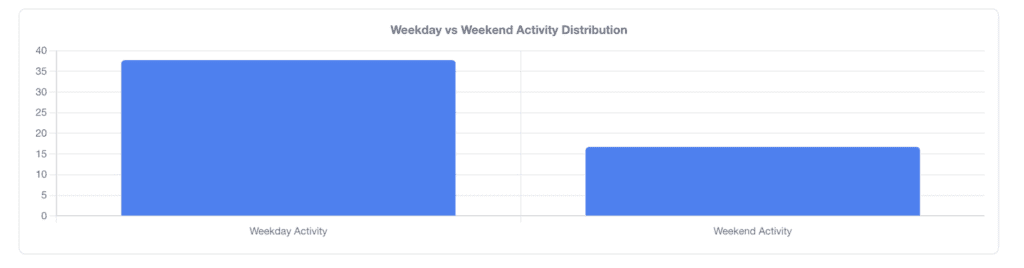
  • Weekdays dominate volume, but weekends often signal deeper, more deliberate engagement patterns (quality over quantity).
 
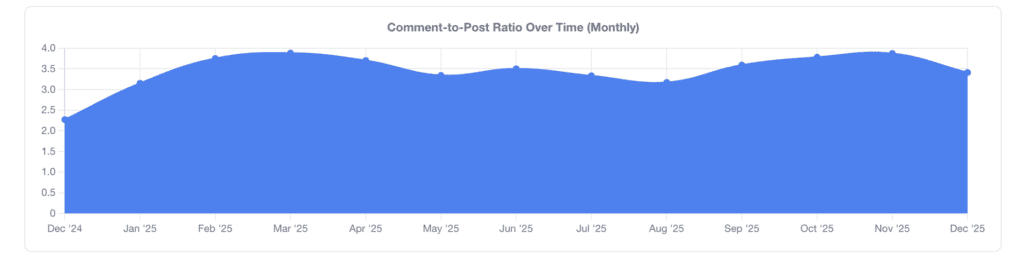
  • Peer discussion intensity (comment-to-post ratio) rises and falls over the year, with noticeable “hot zones” where conversation flows more naturally.
 

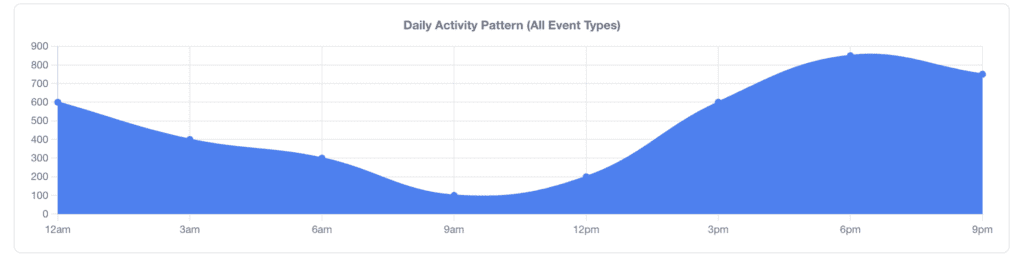
And at the daily level, student engagement has a clear prime-time window (strong late afternoon/evening activity).


What this signals: In Education, when you invite participation matters as much as what you ask. Timing is not logistics — it’s pedagogy.

The Bigger Picture

Despite widespread concern that AI will hollow out learning, the data tells a more human story.

When given the right environment, students:

  • learn on their own terms
  • think in public rather than perform privately
  • listen before speaking
  • teach each other continuously

AI may change how knowledge is accessed — but learning itself remains deeply social.

Education 3.0 isn’t about replacing humans with machines. It’s about creating spaces where humans can do what machines cannot: make meaning together.

About Author:

Shaunak Roy is the Founder & CEO of Yellowdig, where he’s focused on transforming higher education through peer-to-peer learning communities. Yellowdig supports 100,000 daily posts across 150+ U.S. institutions, helping drive 20% higher participation and 10% higher retention as schools tackle the dropout crisis. Shaunak is an IIT Bombay ’01 and MIT ’06 alum, a startup builder, and host of the EdUp EdTech podcast, where he explores how AI is reshaping learning. He’s passionate about combining community + AI to empower students and improve outcomes.

Subscribe to Shaunak’s newsletter: https://www.linkedin.com/newsletters/education-3-0-7094351890590650368/

Keep reading
Yellowdig
Want a Yellowdig Community that doesn’t suck? Follow our best practices.

In 2020, we created a composite Community Health metric that captures four key dimensions of student engagement and achievement. Along the way, we confirmed something we already knew: instructors who use many of our best practices have Communities that perform significantly better than instructors who use fewer. Over the past 3 years, we’ve continued to […]

Product Updates
Yellowdig Engage Product Update 2/19

Features: Password complexity checking. This strengthens the security of users’ accounts. Post reply-to threading UI. This distinguishes replies to comments from replies to posts, making it easier to read and track long conversations. Avatar hover card. This allows users to follow and directly message each other by hovering over their picture in the feed. Interactive […]

Student Success
The Textbook’s Crumbling Monopoly

But that is no longer the case today. The textbook’s monopoly on knowledge is crumbling (if it hasn’t already). Scan any university campus or peek in on any dorm room and you will see fewer books. Why? Well aside from the astronomically inflated cost of textbooks at campus bookstores, the model in which students acquire […]

See Yellowdig in Action Today

Experience how effortless engagement and real community can transform your classroom or campus. Book your personalized walkthrough—no pressure, just real results.