As Halloween rolls around the corner, we wanted to help you to save the spooking for the holiday by keeping it out of your classroom. We have compiled 5 common mistakes instructors make while running an online class to keep you from falling victims to these easy tricks. Read to the bottom and you may even find yourself a special treat from the Yellowdig team!
Below are some common mistakes teachers can avoid to thoughtfully build communities in a virtual learning setting:
1) Requiring students to reply to your prompts in discussion boards
This very common but very detrimental mistake is a root cause of many discussion board problems. It stifles any opportunities for real conversations, and instead encourages students to write mini-essays for the professor. Then, it results in many students repeating the same thing over and over again or struggling to find a new angle that hasn’t been written to avoid plagiarizing.
We recommend saving these types of questions for your exams and allowing your students to have the freedom to bring in their own questions related to your class topics. This method is much more engaging for students in a discussion board because they can tie your material into current events, other classes they are taking, or even other parts of your class. This type of thinking is much more along the lines of what we hear most professors intend to facilitate with their discussions, yet miss the mark by putting their students in a box.
2) Relying too heavily on synchronous elements of class
Yes, tools like Zoom have been critical to education’s mass transition to online learning, but they have their limitations. We have heard of TAs sitting in Zoom office hours all alone week after week. Those students don’t have less questions than previous years’ students, the transition to online learning has made students needs different than in person.
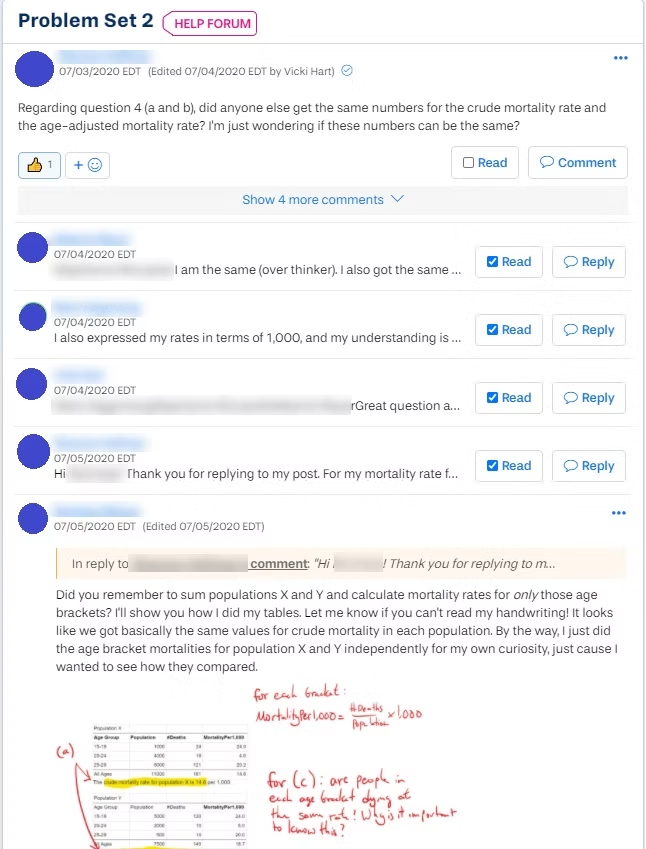
We have seen professors have a lot of success with setting up an asynchronous “help forum” to meet the needs of students in this new digital world. See an example post from one of these discussion boards below.
Most students are no longer able to meet up at the library with their classmates to do their biology class homework together or run down the hall to the really smart computer science major at 2 am right before a lab is due, this is where a Yellowdig community set up as a “help forum” comes in. Since students may not know each other before the class, this give students an opportunity to reach out to their classmates for questions they have about the class. The existence of the forum helps not only the students asking the questions, but also reinforces material for the students answering and reading through. A whole class of students will likely be able to answer a question faster than a single professor, and this helps to prevent repeat questions.
3) Ignoring best practices set by online learning tools
Tools like Zoom, Canvas, and Yellowdig all have teams of employees dedicated to client success who work hard to ensure their products work well when used the way they are intended. If you ignore one of Zoom’s best practices by not having a password for Zoom meetings, you run the risk of a “Zoom bombing” from an unwelcome visitor. Similarly, if you ignore Yellowdig’s best practices, you run the risk of having a community haunted by disengaged students. Following our best practices not only ensures you are motivating your students to create a lively, natural discussion, it also ensures that our point system works as intended. Our recommendations are not something we just think will work well, but are proven with evidence collected across multiple universities to improve course outcomes.
4) Not tracking or reviewing data from your classes
Not all online teaching tools provide useful data that can give insights into your student’s engagement and retention, but it is important to make sure you don’t ignore the ones that do, like Yellowdig. Our community health scores can help you see how your individual community stacks up to Yellowdig as a whole or even your own organization. If you are doing poorly, that could be an indicator that you are missing some of our best practices.
Reviewing the data can also help you catch students who may be on the brink of withdrawing. This is something you may be able to spot more easily in-person, but online can remove some vital indicators. Luckily, Yellowdig makes it easier to spot with a network graph. We have learned that students who are on the edges of the network graphs, who tend to only post and not engage with other students, are more likely to drop the class. Armed with this knowledge, you can intervene and find out what is causing the student’s lack of involvement.
5) Treating online lectures like in-person lectures

3 hour lectures in-person can be very engaging and allow for interaction between students. 3 hour video lectures can be painful. You let your students go to the bathroom during in-person classes, so don’t be that professor who gets upset when students turn off their camera for a little bit during a virtual lecture.
On a more serious note, requiring students to have their cameras on may be a painful experience for students experiencing trauma, and will harm the student’s learning. They also may not be in an environment where they feel comfortable sharing with 40 other students, or they may not want to share their current appearance due to depression or anxiety. This is a very serious topic, and something that Karen Costa discusses more in depth in “Cameras Be Damned.”
There are alternatives to having students sit through a 3 hour Zoom call. If you would typically use part of your time in class to have a whole class discussion, this is the perfect opportunity to swap out some of your time for an online discussion with Yellowdig. To keep the personal feel, you could even have students record videos of themselves about the topic and post them to the board. This option can help students develop their skills without running into Zoom fatigue.
You've earned a treat!
Thank you for sticking through to the end. We may not be able to send you a candy bar through our blog, but we’d like to give you something we hope you think is even better… the opportunity to try Yellowdig next semester at no cost! Click below to connect with a Yellowdig representative to learn more and claim a limited spot in our no-cost trials.