What is Hybrid Learning?
Hybrid learning is a unique combination of in-person and online instruction, mixing traditional styles of teaching and learning with online teaching practices. The goal of this type of learning is to provide different techniques of learning to effectively deliver course content and material. Students enrolled in hybrid classes that meet three times a week may only attend in-person classes for two days, leaving the remaining day to complete an online assignment.
Many colleges have been successfully implementing hybrid learning models for years, citing a shift away from traditional face-to-face instruction. Over the course of the pandemic, hybrid learning and blended learning has slowly become a necessity for institutions. Although hybrid learning and blended learning are used interchangeably, they are not identical.
What is Blended Learning?
Both styles of teaching incorporate traditional styles of learning with the addition of technology, but, unlike hybrid learning, blended learning does not take away from the unique aspects of face-to-face interactions. For example, students who have a class three times a week will meet on all those three days, and will also have an extension of learning through technology. The online instruction in blended learning is meant to complement and supplement the materials learned in class. Using the above example, students may meet all three days of the week, and then be assigned to write discussion posts or collaborate with other students to finish assignments online.
Make sure your online classroom complies with the DOE's April 2020 Update
In case you missed it, the Department of Education (DOE) finally released the last set of regulations from its epic 2019 negotiated rule-making process on April 1st 2020. WCET has a comprehensive list of blogs with the latest updates from the DOE.
Make sure your online classroom complies with the DOE's April 2020 Update
In case you missed it, the Department of Education (DOE) finally released the last set of regulations from its epic 2019 negotiated rule-making process on April 1st 2020. WCET has a comprehensive list of blogs with the latest updates from the DOE.
Is Hybrid Learning the New Norm?
With the sudden shift to online classes in the beginning of the pandemic, many were worried that online learning would leave a bad taste due to the lack of proper preparation. However, as classes prepare to return to the classroom in Fall 2021, many students want to continue online learning. Unlike the previous iteration of traditional in-person learning, many elements of hybrid and blended learning are likely to remain. This could be in the form of students opting to take a class online instead of meeting face-to-face, but many instructors are also likely to carry some blended learning techniques back into their normal classrooms.
How Can Schools Begin to Incorporate Blended and Hybrid Learning Techniques?
After many semesters with virtual learning, institutions recognized that there was not enough training in using educational technologies, as well as online conferencing technologies. Some strategies moving forward from the post-pandemic phase is that schools should provide targeted training in online instruction, as well as the right equipment. Many of the older professors simply do not have the correct equipment. In fact, many instructors may not actually be opposed to the idea of hybrid or blended models of learning, but rather are posed with tech-related issues.
Nonetheless, training and support from institutions is crucial as students and faculty begin to reach a vital transition to more hybrid learning. Instructors should be adequately prepared for different softwares, how to create hybrid or blended lesson plans, and how to work around software and technology that fails.
What Software Can Help With the Future of Learning?
Building a solid technology foundation is intrinsic to successful hybrid and blended learning. Usually, where most institutions start is a Learning Management System (LMS). This is just one component of technology, but with the new expectations of flexible, virtual learning, adding the implementation of video conferencing is important as well. Video conferencing can offer more flexibility in scheduling, especially when it comes to office hours.
However, again, with the advancements and changes in technology, traditional LMSs are also in need of a revamp. Something that instructors have battled with during virtual learning is the lack of engagement in students. In face-to-face classrooms, instructors are able to engage their students by directly talking with them (and even then only the more extraverted students will engage), but once students login online to finish assignments, there can be a lack of motivation because a traditional LMS cannot mimic the engagement in class, where peers work together to solve problems and discuss class topics.
The education technology space has evolved a lot in past years, and many new solutions for learning have been developed. Yellowdig was created as a solution for instructors that want to engage with their students in meaningful conversations and deep discussions through a gameful learning approach. The platform allows students and instructors to learn inside and outside the classroom naturally, without the use of prompts and hierarchical discussion posts.
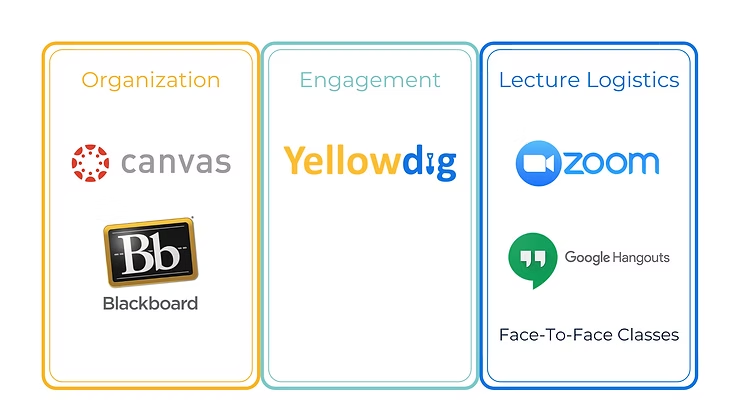
A fully equipped hybrid teaching instructor needs a toolbox that is full, and must account for not only the obvious needs like a place to post assignments and a way to lecture virtually, but also a way to build community and engage students throughout the rest of the week.
Continuous Engagement in Both Hybrid and Face-to-Face Classrooms
One of the many concerns that instructors may face in any type of classroom setting is how they might facilitate discussion, group work, and other forms of active learning with students. It is also especially important to continue this engagement beyond the given classroom times.
If hybrid and blended learning models are becoming normal, the technological aspect is just as important as what happens in class. Students can actively learn and engage in class, but what happens outside of class? By integrating technology, instructors are providing a new horizon for students to learn from their peers.
Just about everything that students do outside the classroom involves technology, and taking advantage of that can improve collaboration between students, as well as provide a space for them to engage, have conversations, and learn from each other. This can improve successful active learning inside the classroom as students will have a better connection with each other and be more willing to collaborate with each other in discussions or group work.
As schools begin to go back to in-person classes, Yellowdig helps instructors enhance their classroom setting. Our platform helps students connect inside and outside the classroom, allowing more hands-on and actively engaging experiences for students and their instructors. When going back into the classroom, it is important to think about how to encourage active learning in hybrid classrooms and how to support continuous engagement in both the virtual classroom and face-to-face classroom.
If you have any questions don’t hesitate to reach out to us at [email protected]!