Expectations:
Yellowdig communities can provide a vibrant space for your audience to interact, network, help each other, promote your objectives and events, and provide resources. However, to achieve these results, it’s important to note that Connect and Succeed communities are quite different from Yellowdig course associated Engage communities. One of the most important differences is that since there is no course grade associated with encouraging participation in your community, you’ll need to take some action to get members to join your community and keep them coming back.
People participate in communities to meet their needs. Therefore, one of our most important pieces of advice is to be sure you design a community for your constituents around their needs, not yours. It’s worth noting that while you can create a successful community (and we’ll be there to help along the way) you should have realistic expectations:
-
Don’t expect everyone you invite to join. Yield is very dependent on the audience and how they are invited, but it is quite typical for less than 50% of those invited to ever enter the community.
-
Don’t expect everyone who joins to post or comment, and don’t expect everyone who posts or comments to do so regularly. There is a “rule” known as the 1% rule, which states that normally only 1% of online community participants create content. With Yellowdig, some incentives, and good content and management strategies we do expect to beat that, but under normal circumstances, most of an audience will “lurk” and never post or comment.
-
Lurking is important! Expect much of your audience to read and sometimes react to conversations without posting or commenting themselves. Do not discount passive participation or its value as a signal that the community is meeting a need.
Getting Started:
Audience and Community Owner Needs Assessment:
-
You’ll want to do your best to understand the needs and motivations of your audience and then figure out how your intentions dovetail with what they already care about. Doing a needs assessment will help you create your initial topics for the community and understand how you can help make visiting your community a habit for your learners and alumni. Define and document who your audience is, any relevant things about their demographics, and consider what they all have in common and what they may have significant differences around.
-
Given the audience, what kinds of conversations, content, or information might attract them to the community? Is there any “regular” content that is easy to curate and share that your audience might build a habit of coming just to remain aware of (e.g., dining commons menus; sports or event schedules; university calendar milestones; etc.)?
-
What are your goals for the community? Is the content you consider important to share something that you actually think your audience is going to know they care about? Is your content something the audience will actually want to interact with? Consider doing a focus group to better understand your audience or to invite your eventual community members to be part of the process of designing the community.
Dedicate a primary community manager for at least 10 hours per week. Community managers will:
-
Regularly curate a variety of content based on audience needs and interests.
-
Encourage member interactions with one another and the material.
-
Run contests or other topical events to encourage active participation.
-
Coordinate with other community managers or student ambassadors to help run and grow the community.
-
Evangelize and advertise the community to encourage participation.
Prepare your community before launch:
-
Create initial Yellowdig Topics based on the main areas that you expect members to have conversations about, and that will allow them to find and contribute to those conversations.
-
Use Yellowdig points in the community. They can motivate community members and allow you to easily find your most active users.
-
Send a “save the date” message to potential members to get them excited about the community to ensure better a “critical mass” of people start participating together.
-
Populate the community with interesting examples of relevant content for each Yellowdig Topic so members can start engaging immediately.
-
Have community leader post messages welcoming members to the community. Best with video.
-
Use multimedia where possible. Avoid a wall of text.
-
Post a poll sharing initial Yellowdig Topics and asking what other members would like to see.
-
If appropriate, have an initial contest with a valuable reward for people meeting a point threshold or other verifiable milestone. (For larger communities, meeting this threshold could enter members in a raffle for the prize)
-
Schedule a high-value event to take place in the community. (Ask me anything session with a community leader or other notable members)
-
Choose a method of inviting your audience to the community (email invitations sent from Yellowdig, through LMS, Yellowdig sharelink)
-
Send an email letting them know they will receive an invitation and provide steps for joining the community. We can help!
-
Make sure that all new members are welcomed upon joining.
-
Respond to their initial post.
-
Weekly (Monthly) post @mentioning each new member and welcoming them.
-
Keeping Your Community Going:
-
The Community Manager should:
-
Welcome all new members to the community. This will provide some initial acknowledgment of their presence and will give new members an opportunity to ask any questions about the community.
-
Invite community members to return to the community and join conversations by:
-
Highlighting key quotes asking community members to share their opinions, experiences, etc., related to these conversations.
-
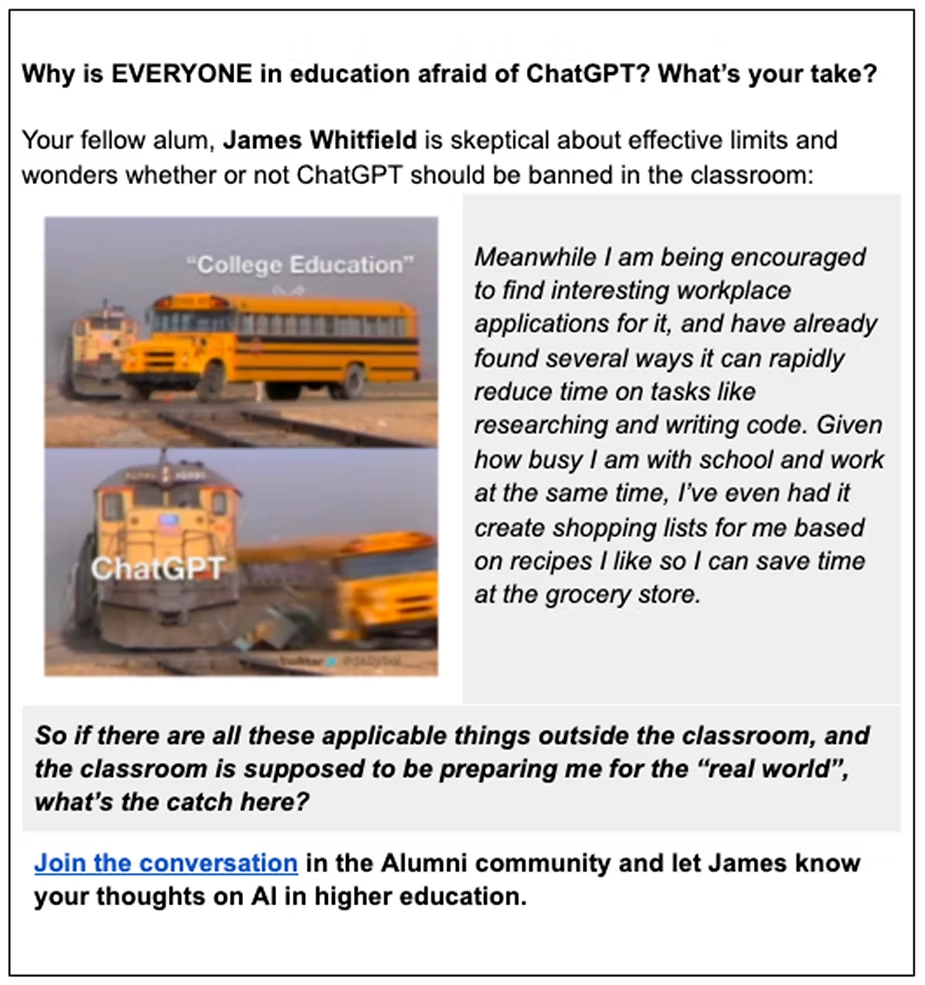
Create screenshots of key posts/comments, provide a permalink to the particular post/comment, and ask related questions via email/newsletter, portal to invite members to respond. “What have you done in this situation?” “What’s your opinion?” “Can you help?” “Have you encountered something similar? How did you deal with it?
-
IMPORTANT: Invite people to specific conversations/activities in the community rather than just reminding them to come back to the community.
-
-
-
EXAMPLE email or social post inviting your members back to a conversation in your community:
ii. Spotlighting community members in the community and outside the community (Monthly newsletter), Institutional web pages and other communications going to your audience, LinkedIn, etc.
iii. Use Yellowdig Accolades to point out “must see” conversations and highlight members with valuable contributions to the community. (You can share these in a monthly newsletter)
1. Accolades should also be used to direct your members to important community resources.
iv. Celebrate your most active community members with @mentions for your high point earners in a post every week/month/year.
c. Provide a monthly newsletter to members via email highlighting community members and providing direct links to the above conversations. (try using a format similar to the image above.)
d. Regularly curate a variety of content that will meet the needs of the community and inspire conversations.
e. Regularly review Yellowdig Topics usage in Community Health to ensure they are meeting community needs. Occasionally poll the community to ask what suggested Topics they may want to add.