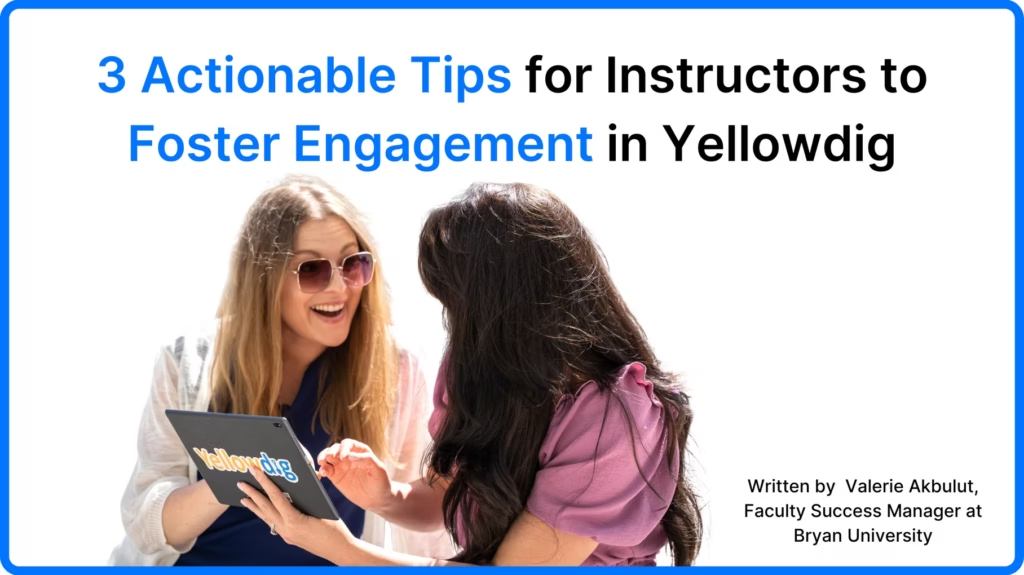
Close your eyes. (Okay, don’t close your eyes but take a moment to imagine.) Imagine a fun, engaging community where students dive into deep conversations, engage in critical thinking, and develop community with their peers and you. That sounds AMAZING, right? Here is the good news! It is 100% possible.
Whether you are new to using Yellowdig or have been using it for a while, creating a space for collaborative learning can feel daunting and overwhelming. But it doesn’t have to be. To help you, here are three things you can do to see an immediate impact on your Yellowdig communities that will make your communities fun and engaging, student-driven, and develop community.
Let’s break it down:
2. Don’t Post and Ghost!
Letting students drive the conversations doesn’t mean being an inactive participant. Don’t post once a week and then ghost your students. By doing so, you have created an environment that implies students should post and ghost. Be active! You want to be present in the community. Instructors who actively engage in their communities help those communities thrive. Now, that does not mean you need to interact with every student’s post. Your goal is to engage in conversation and community building. Log in at least 3 to 4 times a week and jump into conversations. Look for students who you didn’t interact with the week before, have few responses on their posts or are genuinely intrigued by what the student has to say and want to add to the conversation. Don’t feel like you always have to post a comment. You can use emojis like a thumbs up to acknowledge the student’s contributions.
3. Teach Through Comments
When interacting with students, don’t comment with “Good job” or “Thanks for sharing.” Use this as an opportunity to teach through comments and enhance the learning experience. You can reply to students in a variety of ways that encourage critical thinking. You can ask follow-up questions, play devil’s advocate, share resources, or share an example that relates to the content shared. Teaching through comments motivates students to engage with the material and dig deeper into the content for more critical thinking. A bonus is that it models the behavior for students of what it looks like to be a member of a social learning community.
Let’s recap shall we? By empowering students to take the lead, being active and not posting and ghosting and teaching through comments, we can achieve the types of learning communities that encourage collaborative learning that are fun and engaging. Now that rocks!
About the Author:

Valerie Akbulut is the Faculty Success Manager at Bryan University. Her passion is aiding faculty to reach their teaching and professional goals through creative training, professional development, and consistency in faculty policy development. Valerie has played an instrumental role in developing and implementing a quality control rubric that supports the student experience and gives faculty the tools they need to be confident in their roles. She earned her master’s degree in Interpersonal Communication at the University of Central Florida and is working towards her EdD in Education with a focus on Performance Leadership Improvement.