
April 12, 2022

How to Reduce Professor Burnout with Modern Student Engagement

Unlocking Student Motivation with Gameful Learning

Instructors everywhere face the same uphill climb: getting students to participate meaningfully—especially in online classes. Despite your best efforts, traditional discussion forums can feel more like boxes to check than places for real learning. What’s the antidote? For many educators, the answer is gameful learning.

What is Gameful Learning?

Gameful learning isn’t about turning your classroom into an arcade. It’s about applying the elements of games—clear goals, meaningful choice, and immediate feedback—to academic environments. Platforms like Yellowdig use points, badges, and accolades to recognize real contributions, making participation feel rewarding, not obligatory.

Why Gameful Elements Spark Engagement

Why do students respond so well to this approach? Because gameful mechanics tap into motivation in ways that rote assignments can’t. When students earn points for thoughtful posts or insightful replies, they're encouraged to dig deeper and share experiences. A little friendly competition doesn’t hurt, either—leaderboards spark engagement and help shy students ease into participation.

Yellowdig’s Approach: More Than Just Points

Yellowdig’s platform is built around the idea that engagement should be authentic, not forced. Points aren’t given for empty “I agree” comments, but for contributions that spark conversation and critical thinking. Students can curate their posts with articles or videos that interest them and receive recognition when others interact with their content. This approach fosters intrinsic motivation—students participate because they want to, not because they have to.

Real Results in Real Classrooms

Instructors using Yellowdig consistently report stronger participation and deeper discussion. One faculty member noted that “seventy-five percent of student questions get answered by their peers,” freeing up their time to tackle more advanced topics. Students say they look forward to checking new posts, sharing resources, and earning recognition for meaningful contributions.

Tips for Making Gameful Learning Work

  1. Set Clear Expectations: Let students know how points are earned and celebrate thoughtful interaction, not just frequency.
  2. Offer Meaningful Feedback: Use accolades and comments to highlight particularly insightful posts.
  3. Encourage Creativity: Remind students they can use links, visuals, or even short videos to make their posts stand out.
  4. Foster Healthy Competition: Leaderboards and weekly challenges can energize participation and keep momentum going.

The Takeaway

Gameful learning turns participation from a chore into an opportunity for discovery and community. With the right design, recognition, and tools, you’ll see students take more ownership of their learning—unlocking not just better engagement, but genuine excitement for the subject.
Ready to see how gameful learning can transform your course? Try out Yellowdig and join a thriving community that believes learning should be as rewarding as it is rigorous.

Our teachers are the backbone of society. Teaching, planning, and making an impact on students are no small feats. However, at times, we take for granted the hard work, time, and energy put in to keep academia going. One large issue hitting professors like never before is faculty burnout.But don’t fret too much– we have a solution! Keep reading to find out more. 

Faculty burnout has been a problem long before any mention of COVID-19 in mainstream media. Academia is an industry characterized by self-sufficiency and that is vulnerable to the quickly changing landscape of the world. Shrinking budgets, growing workloads, and job insecurity are the mark of common issues faculty face.

But what exactly is faculty burnout? Faculty burnout, also sometimes called teacher burnout, is a work-related stress that affects one’s mental, emotional, and physical well-being that sometimes brings about a “reduced sense of confidence and personal identity.” These issues were amplified in addition to new concerns due to the rampage of the pandemic.

The Effect of COVID-19

The pandemic has brought concern for higher education faculty to the forefront, as many faculty members cited that they missed human connection and felt a mental exhaustion. Many faculty and teacher burnout statistics have arisen during this time. For example, 35% of higher education faculty said that they seriously considered changing their career path away from academia since the start of 2020. Through all of this hardship has come serious evaluations of how to improve faculty experience within the industry and of how to reduce burnout. Our solution? Modern Student Engagement.
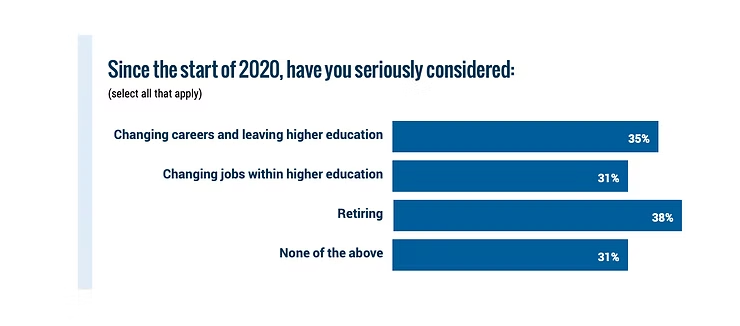
From “'On the Verge of Burnout' Covid-19’s impact on faculty well-being and career plans," Fidelity Investments, The Chronicle of Higher Education

Higher Education Dynamics

It is no surprise that the well-being of faculty and students are interconnected within academia. Tough times for students are felt by faculty and vice versa; and moments of euphoria within teaching are felt by learner and instructor alike. This creates what seems to be a dichotomy between re-evaluating the way learning is delivered to students and ensuring that faculty is receiving the support and resources that they need to safely and effectively do their jobs.

However, the interconnectedness of student and faculty emphasizes solutions in binding these worlds together rather than investigating them as separate entities. The answer is in collaboration, not isolation. In this, comes modern student engagement.

How Can Modern Student Engagement Help?

Student engagement in general is an essential component to a successful classroom environment. With changing times, developing technologies, and different students comes the necessity to develop pedagogy alongside these other changes to ensure that learner and instructor are reaping the most possible benefits. Using technology in and out of the classroom is an exemplary manner of getting students involved while putting less work on an instructor. Check out our previous blog highlighting student engagement tips for K-12 instructors here.

Yellowdig is one platform with proven success in this field. We are not like other discussion boards– we are a discussion platform that encourages students to communicate and engage organically with each other, the instructor, and the course content. By using our patented points system that automatically connects Yellowdig points to your school’s LMS and other pieces of technology, instructors find themselves gaining more and more free time as well as bringing happiness back to their profession.

Client Testimonials

Here are just a few testimonials from real life Yellowdig clients:

“About 75% of the students’ questions are answered sufficiently by other students, which is a huge timesaver and it lets me focus on the more challenging questions that students have. I LOVE that students are able to get points for asking and/or answering questions.” -McKinzie Sutter, University of Nebraska-Lincoln

Yellowdig Cares

Our platform is designed by and for instructors. We are constantly listening to our clients, their concerns, and their ideas to make the world of EdTech as positive as possible. Faculty burnout is an issue that many of us have faced, so we are committed to restoring joy to such an important profession that can truly change the world for the better.

We approach the education world with humanity first, investing in the joy, success, and satisfaction of our clients. Thank you to our Yellowdig Instructors for all of your hard work. If you would like to find out more about Yellowdig and become a Yellowdig Instructor, all you have to do is click here.


Keep reading
Yellowdig
Want a Yellowdig Community that doesn’t suck? Follow our best practices.

In 2020, we created a composite Community Health metric that captures four key dimensions of student engagement and achievement. Along the way, we confirmed something we already knew: instructors who use many of our best practices have Communities that perform significantly better than instructors who use fewer. Over the past 3 years, we’ve continued to […]

Product Updates
Yellowdig Engage Product Update 2/19

Features: Password complexity checking. This strengthens the security of users’ accounts. Post reply-to threading UI. This distinguishes replies to comments from replies to posts, making it easier to read and track long conversations. Avatar hover card. This allows users to follow and directly message each other by hovering over their picture in the feed. Interactive […]

Student Success
The Textbook’s Crumbling Monopoly

But that is no longer the case today. The textbook’s monopoly on knowledge is crumbling (if it hasn’t already). Scan any university campus or peek in on any dorm room and you will see fewer books. Why? Well aside from the astronomically inflated cost of textbooks at campus bookstores, the model in which students acquire […]

See Yellowdig in Action Today

Experience how effortless engagement and real community can transform your classroom or campus. Book your personalized walkthrough—no pressure, just real results.